

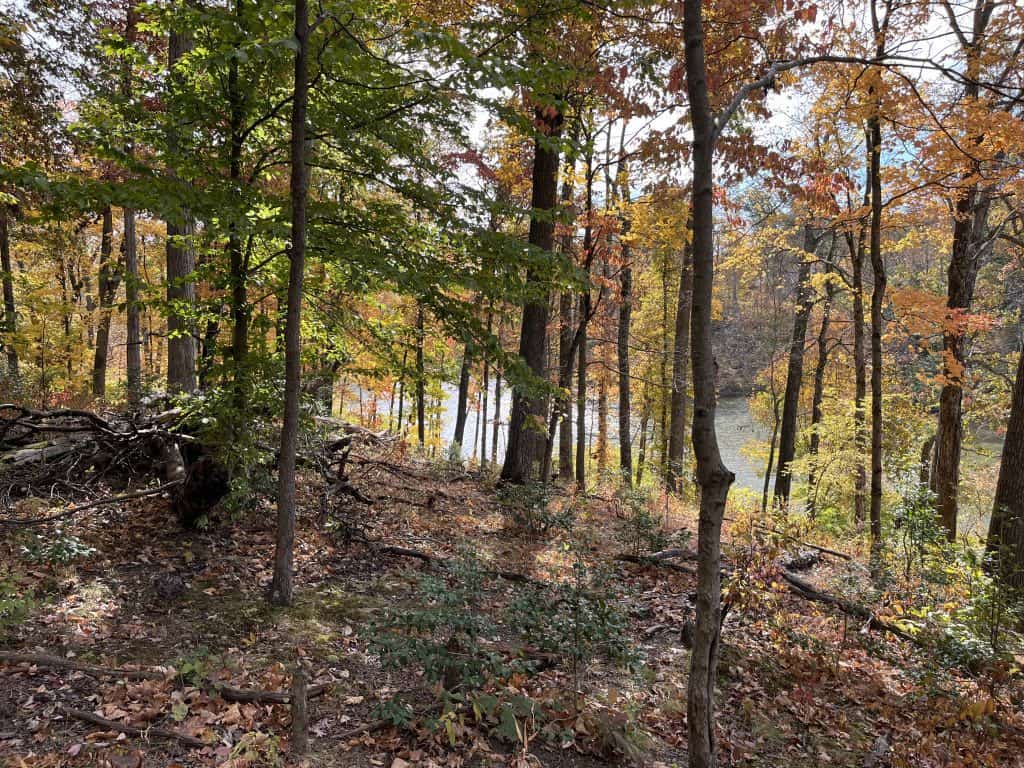
When a piece of land becomes available in Indian Hill or a select Cincinnati neighborhood, the listing tells you very little. The acreage is on paper. The asking price is on paper. The lot lines are on paper. What the land actually offers, and what it actually asks of the home that will go on it, can only be discovered by walking it.
For a custom luxury home, that walk is the most consequential hour you will spend in the entire process. Everything that follows flows from what the land is, not from what the listing says it is. The design, the build, and the way you live in the home for decades all begin with the ground.
After forty years of designing and building in this market, the Hensley team walks land differently than a buyer might walk it alone. The walk is not about whether the lot is beautiful. Almost every lot in Indian Hill and the select Cincinnati neighborhoods around it is beautiful. The walk is about what the land is telling you to design, what it is willing to accommodate, and what it will quietly resist.
These are the things we look for.
Topography and the Shape of the Home
The first thing the land tells you is the shape it wants the home to be.
A gently sloped lot opens up a walkout basement, a dramatic rear elevation, and views that pull the eye downward across the property. A flat lot allows for a different kind of architecture: a single primary level, generous lateral space, and a home that sits in conversation with the horizon rather than the valley.
Severe slope changes the conversation entirely. It can produce some of the most memorable Hensley homes in the region, but it requires planning that begins on day one. Foundation costs rise. Site preparation rises. Drainage strategy becomes essential. None of this is a problem. It simply needs to be priced into the decision before the lot is purchased, not after.
Walking the slope teaches you whether the home will work with the land or fight it. Hensley Homes works with it.
Orientation and the Path of the Sun
The next thing the land tells you is how the home should sit on it.
The path of the sun across the lot determines almost everything about how the home will feel to live in. Morning light in the kitchen. Afternoon light in the great room. Evening light on the back terrace. Where the primary suite faces. Where the windows that matter most should be placed.
A south-facing rear yard is one of the most desirable land features in our region. It produces light all day, warmth in winter, and a flourishing back garden. A north-facing rear yard requires a different design strategy. The front of the home receives the primary sun. The architecture shifts accordingly.
We walk a lot at the time of day a client will most often experience it. A buyer who works from home in the morning sees the lot differently than a buyer who hosts evening dinners on the terrace. The land does not change. The home that fits it does.
Trees, Stone, and the Features Already There
Indian Hill and the select Cincinnati neighborhoods around it are defined as much by their mature canopy as by the homes within them. A century-old oak is an asset that cannot be replaced in a lifetime. A stand of mature beeches frames a home in a way no landscape installation can replicate at scale.
When we walk the land, we map what is already there. Which trees are healthy and worth preserving? Which trees should come down for the safety of the home and the longevity of the canopy itself? Which natural features anchor the design: a creek, a rock outcrop, an existing meadow?
The best Hensley homes are designed around what the land already gives. The buildable footprint, the driveway approach, the orientation of windows, and the placement of outdoor living spaces all respond to features that were there long before the home will be.
This is one of the quiet differences between an architect drawing on a blank lot and a builder walking a real piece of land. We are not designing the home you might want. We are designing the home this land will hold.
The Difference Between Acres and Buildable Area
Acreage is one of the most misunderstood numbers in luxury land.
A four-acre lot is rarely four buildable acres. Setbacks from property lines reduce it. Easements for utilities or access reduce it. Wetlands, steep grades, and protected areas reduce it. By the time the buildable area is measured honestly, a four-acre lot might offer one acre of practical building site.
That is not necessarily a problem. One acre is often more than enough for the home itself, its outdoor living spaces, and the privacy it requires. The surprise comes when a buyer pays for four but expects to use four. That surprise belongs in the conversation before the offer is made.
We walk every lot with the buildable area in mind. Where the home can actually sit. Where the driveway will run. Where the pool, terrace, or guest house might go. Where the property’s real value is concentrated.
Utilities, Access, and the Things You Cannot See
Some of the most important features of a lot are invisible.
Whether the property is on a municipal water main or requires a well. Whether sewer service is available or whether a septic system will be designed. Where the power, gas, and fiber lines run, and what it will cost to bring them to the building site. How the driveway will be approached from the road, how it will handle snow in February, and how an emergency vehicle could reach the home.
These are not glamorous questions. They are the questions that separate a great lot from a complicated one.
Hensley has been answering these questions in Indian Hill for forty years. We know which areas have the best municipal infrastructure. We know which roads accommodate the kind of approach a long driveway needs. We know the engineers and surveyors who handle these questions for the homes our clients want to build.
When we walk a lot with you, the unseen layer is part of the walk.
Where the Water Wants to Go
Drainage is the single most underestimated factor in luxury land evaluation.
Every piece of land has a relationship with water. Where it falls. Where it pools. Where it flows during a heavy storm. Where the soil holds it and where it sheds it. A home designed without a clear answer to these questions will fight water for its entire life. A home designed with a clear answer becomes part of the landscape’s natural rhythm.
We walk lots after a rain when we can. The land that drains beautifully tells you so. The land that holds water in unwanted places tells you that, too. Either way, the information is invaluable. It is far easier to learn it before the lot is yours than after.
What the Land Is Telling You
A piece of land is a conversation, not a commodity. The best Hensley homes are designed by listening to what the land is already saying about itself.
A lot may say: build long, low, and into the slope. Another may say: build tall, central, and let the views surround you. Another may say: keep the home modest in footprint and let the grounds do the talking. The same buyer, on three different lots, will end up with three different homes. That is not a flaw of the process. It is the process working correctly.
A custom home that ignores its land will spend decades feeling slightly off. A custom home that listens to its land becomes part of the place. The difference is invisible on a floor plan and obvious in a finished home.
This is the value of walking the land with a partner who has walked thousands of lots in this market. We can hear what the land is telling you and translate it into a home that belongs to it.
Walk It With Us First
If you are considering a lot in Indian Hill or a select Cincinnati neighborhood, the most useful step you can take before you commit is to walk it with us.
The walk costs nothing. It commits to nothing. What it produces is a clear-eyed reading of what the land actually is, what the home that fits it would look like, and what the realistic path from lot to finished home will require. That clarity, before the offer, is worth more than any number on the listing.
Hensley Land Alerts will tell you when premier land becomes available. The walk will tell you what to do with it.
